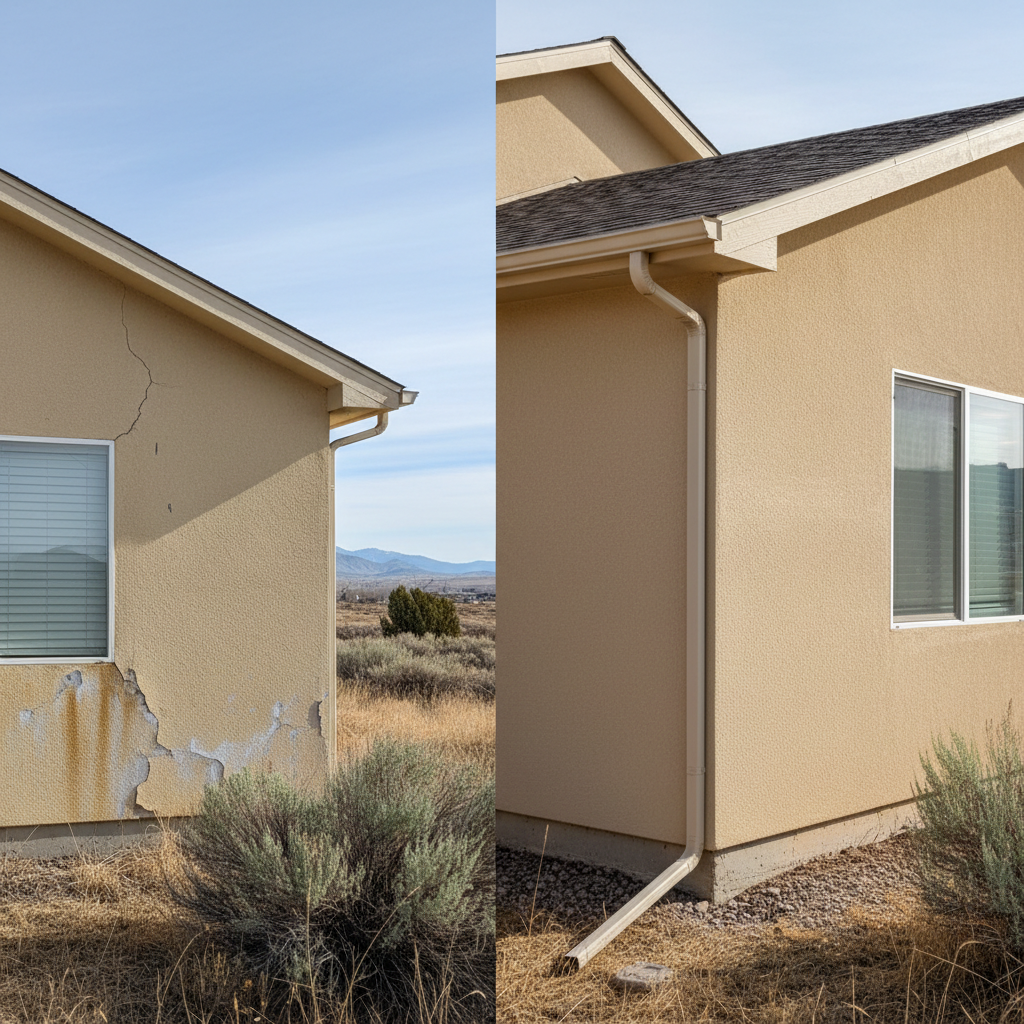
Alright, let's talk stucco. If you're building a new place or thinking about re-siding your home here in Saratoga Springs, you've probably heard there's more than one way to do stucco. And you'd be right. For homeowners, it usually comes down to two main options: traditional three-coat stucco or what we call EIFS (Exterior Insulation and Finish System). Both can look great, sure, but they're built differently and perform differently, especially with our wild Utah weather swings.
I've been working with stucco for a long time, and I've seen both done right and done wrong. So, let's cut through the noise and figure out which one might be the better fit for your house.
Traditional Three-Coat Stucco: The Tried and True
This is the stucco most people picture when they hear the word. It's been around forever, and for good reason. It's made up of three layers applied over a wire lath: a scratch coat, a brown coat, and then the finish coat. Each layer cures, making it a pretty solid, rigid surface. Think of it like a thin, hard shell on your house.
- Cost: Generally, traditional stucco is a bit less expensive upfront than EIFS. You're looking at materials that are pretty common – cement, sand, lime, water. The labor is skilled, no doubt, but the material cost tends to be lower.
- Durability: This stuff is tough. It's hard, impact-resistant, and can take a beating. If you accidentally hit it with a lawnmower or a kid's bike, it's less likely to dent or puncture than EIFS. It's also fire-resistant, which is a nice bonus.
- Maintenance: Pretty low maintenance. You'll want to keep it clean, maybe power wash it gently every few years. Cracks can happen, especially with our clay soils here in Saratoga Springs causing some foundation movement, but they're usually repairable. The big thing with traditional stucco is managing water behind it. If water gets in and stays, you're looking at problems. Proper flashing and weep screeds are absolutely critical.
- Appearance: It gives you that classic, hard-coat stucco look. You can get different textures – smooth, sand float, dash – and a huge range of colors. It's got a very natural, masonry feel.
EIFS: The Modern Insulated Approach
EIFS is a bit different. It's a multi-layered system that starts with an insulation board (usually expanded polystyrene, or EPS) attached to the sheathing. Over that, you get a base coat with a reinforcing mesh embedded in it, and then the finish coat. The key here is that insulation layer.
- Cost: EIFS usually costs more upfront. The materials are more specialized, and the installation process can be a bit more involved, requiring specific techniques to ensure proper performance.
- Durability: This is where it gets interesting. EIFS is more flexible than traditional stucco, so it's less prone to cracking from minor structural shifts. However, it's also softer. An impact that would just chip traditional stucco might dent or puncture EIFS. That insulation board isn't as hard as cement, after all.
- Maintenance: Similar to traditional stucco, cleaning is straightforward. The big advantage of EIFS is its superior moisture management if installed correctly. It's designed as a barrier system, and modern EIFS often includes drainage planes to direct any water that gets behind it back out. This is a huge plus for preventing rot and mold.
- Appearance: EIFS can mimic traditional stucco textures perfectly, but it also allows for more intricate architectural details like cornices, arches, and custom shapes because the insulation board can be easily cut and shaped. It gives you a very clean, uniform look.
My Take for Saratoga Springs Homeowners
Okay, so which one should you go with? For homeowners here in Saratoga Springs, considering our climate and common building practices, I lean towards EIFS, specifically a good quality EIFS with a drainage system.
Here's why:
- Insulation Value: Our summers are hot, and our winters are cold. That continuous insulation layer in EIFS is a big help for energy efficiency. It helps keep your house cooler in July and warmer in January, which means lower utility bills. That's a big deal.
- Moisture Management: This is probably the most critical factor. While traditional stucco can perform well if installed perfectly, the reality is that water intrusion is the number one enemy of any exterior cladding. Modern EIFS systems are designed with drainage in mind, creating a pathway for any incidental moisture to escape. With our heavy spring rains and occasional snowmelt, having that extra layer of protection against water getting trapped behind your walls is invaluable. I've seen too many issues with traditional stucco where flashing wasn't quite right, and water got in, leading to rot.
- Flexibility and Cracking: As I mentioned, our soils can be a bit active. That flexibility in EIFS means it's less likely to show hairline cracks from minor foundation settling compared to the rigid nature of traditional stucco.
Now, don't get me wrong, traditional stucco is still a fantastic product when installed by experienced hands. If you're on a tighter budget and you have a contractor you absolutely trust to get every single detail of the flashing and water management perfect, it's a solid choice. But for the average homeowner looking for the best long-term performance and energy efficiency in our environment, EIFS often comes out ahead.
The key, no matter which you pick, is finding a reputable contractor. Someone who understands the nuances of each system and, more importantly, understands how to properly manage water. At Summit Stucco Co, we've installed both, and we always make sure the job is done right, paying close attention to those critical details that prevent headaches down the road. Don't just ask about the stucco type; ask about their water management strategies. That's where the real difference is made.
The Bottom Line
You're investing a lot in your home, and your exterior cladding is a huge part of its protection and curb appeal. For most Saratoga Springs homes, especially with the energy savings and advanced moisture protection, EIFS is probably your best bet. But either way, make sure you're working with pros who know what they're doing. It'll save you a lot of grief later on.